
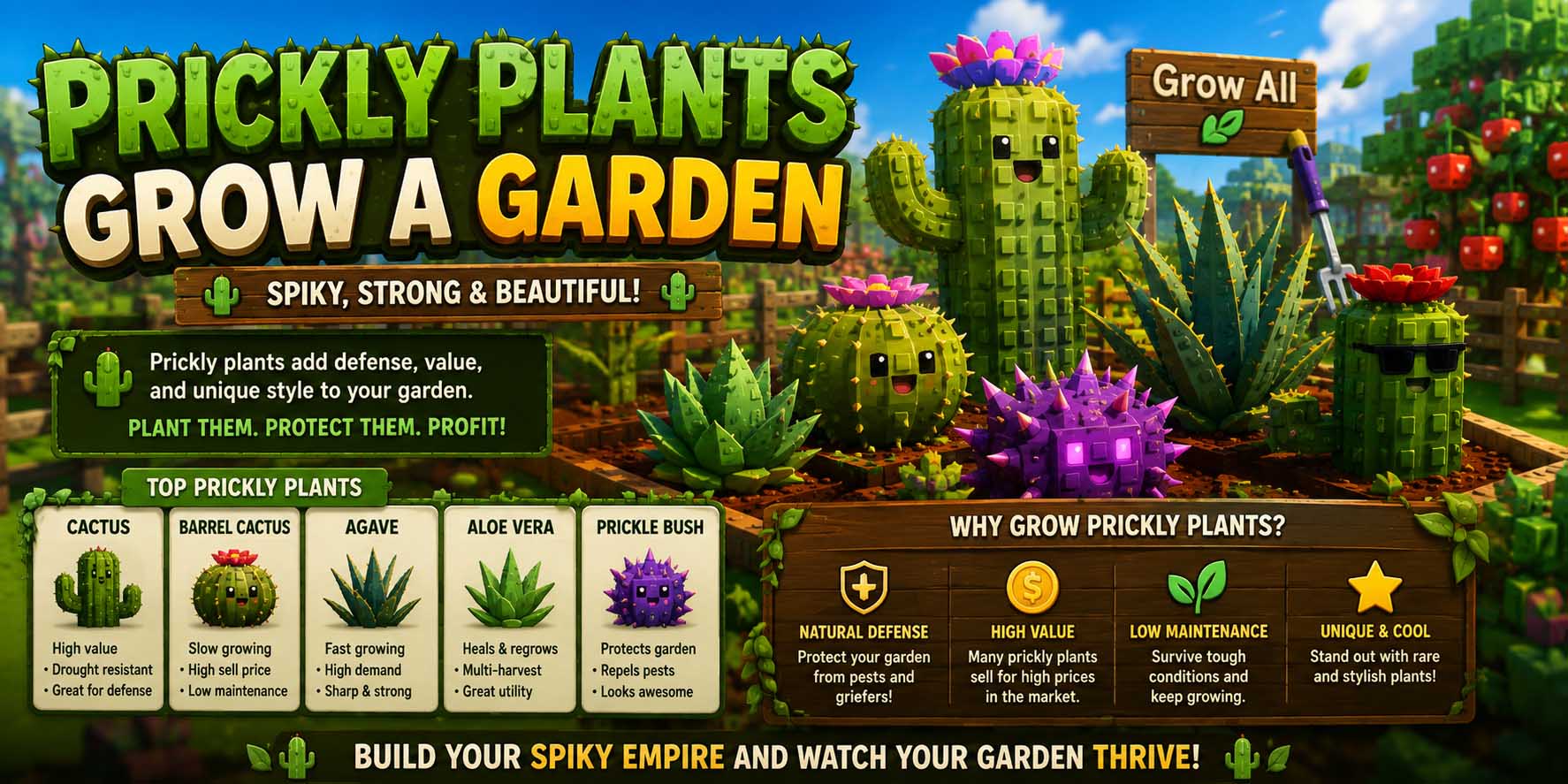
If you’ve been wondering about prickly plants Grow a Garden, you’re not alone. Many players encounter quests, mutations, or challenges that require growing thorn-covered crops, yet the game doesn’t always explain which plants actually belong to the prickly category.
Whether you’re completing seasonal objectives, expanding your collection, or optimizing your farm for better profits, understanding prickly plants can save both time and resources. This guide covers what they are, how to identify them, where they fit into gameplay, and the best strategies for using them efficiently.
What Are Prickly Plants in Grow a Garden?
The term prickly plants in Grow a Garden refers to crops that feature visible thorns, spikes, or cactus-like characteristics. Depending on the current game version or event, these plants may count toward quests, achievements, or special collection objectives.
Unlike categories based on rarity, prickly plants are grouped by their appearance and plant type rather than their value alone.
If a limited-time event asks for thorny crops, only qualifying plants will count toward progress.
Prickly Plants Grow a Garden at a Glance
Here’s a quick overview of the category.
| Category | Description |
|---|---|
| Appearance | Spikes, thorns, cactus features |
| Main Use | Quests, collections, trading, harvesting |
| Availability | Seed shop, events, rewards, trading |
| Difficulty | Easy to rare depending on the plant |
| Value | Varies by rarity and mutations |
Always check the latest in-game descriptions, as seasonal updates may expand or adjust eligible plants.
All Prickly Plants in Grow a Garden
Players frequently search for all prickly plants in Grow a Garden because event objectives often mention the category without listing every crop.
While the available lineup may change as new updates arrive, prickly plants generally include thorny or cactus-inspired species introduced through normal progression, events, or limited seed rotations.
Depending on the current version, qualifying plants may include:
- Cactus-style crops
- Thorn bushes
- Spiny succulents
- Desert-themed flowers
- Event-exclusive prickly plants
If a new update introduces additional crops, review the in-game collection menu to confirm whether they belong to the prickly category.
How to Get Prickly Plants
There are several ways to unlock these plants.
Common sources include:
- Seed Shop
- Event rewards
- Quest completion
- Trading with other players
- Limited-time merchants
- Premium seed bundles (when available)
Rare prickly plants often rotate through seasonal shops, making them worth checking regularly.
Why Players Want Prickly Plants
Prickly plants aren’t collected just because they look interesting.
They often help with:
- Daily quests
- Event objectives
- Collection completion
- Trading
- Garden variety
- Decorative builds
Some updates also increase demand for specific plant categories, temporarily making thorny crops more valuable in player trading.
Monitoring overall grow a garden value trends can help you decide whether to keep or trade valuable plants.
Are Prickly Plants Rare?
Not necessarily.
The category includes both common and uncommon crops, while a few event-exclusive plants become much harder to obtain after their original release.
Rarity depends on:
- Seed availability
- Event exclusivity
- Mutation chances
- Trading demand
A simple thorny plant isn’t automatically valuable just because it’s prickly.
Best Farming Strategy
If you’re collecting multiple prickly plants, efficiency matters.
A strong farming routine includes:
- Keep dedicated planting rows.
- Harvest frequently.
- Replant immediately.
- Save rare seeds.
- Track event requirements.
Organized gardens make seasonal objectives much easier to complete.
Best Pets for Prickly Plant Farms
Pets can improve harvesting speed or provide useful bonuses depending on the current update.
If you’re choosing companions specifically for efficient farming, comparing the latest best pets in Grow a Garden recommendations can help you build a stronger setup.
Different pets support different farming styles, so matching your companion to your goals often produces better results.
Bear Bee and Thorny Crops
Certain pets work particularly well in productive gardens.
For example, many players experiment with Bear Bee Grow a Garden builds because of the pet’s usefulness during long farming sessions.
Although Bear Bee doesn’t exclusively benefit prickly plants, pairing productive pets with organized crop layouts usually improves overall efficiency.
Comparing Prickly and Tranquil Plants
Not every collection category focuses on appearance.
Some events separate crops into themes such as thorny or peaceful.
If you’re also collecting tranquil plants Grow a Garden, you’ll notice those plants emphasize calm, floral, or soothing designs instead of spikes and desert characteristics.
Keeping each category organized can save time whenever seasonal challenges return.
Advanced Farming Tips
Experienced players usually follow a few habits that newer gardeners overlook.
Plant Similar Crops Together
Grouping prickly plants together makes harvesting faster and helps prevent accidentally removing the wrong crops.
Save Rare Seeds
Avoid planting every rare seed immediately.
Holding onto extras prepares you for future quests.
Leave Space for Updates
New plants appear regularly.
Keeping open plots allows you to test fresh additions without reorganizing your entire garden.
Should You Trade Rare Prickly Plants?
That depends on demand.
Trading may be worthwhile when:
- Event demand is high.
- Duplicate plants are available.
- Market values spike.
- You already completed your collection.
If a plant becomes difficult to obtain later, keeping one copy is usually a smart long-term decision.
Common Mistakes
Try to avoid:
- Selling every duplicate.
- Ignoring seasonal events.
- Forgetting daily quests.
- Trading rare seeds too early.
- Mixing event crops with ordinary harvest rows.
Planning ahead often saves far more time than constantly rebuilding your garden.
How Seasonal Updates Affect Prickly Plants
Grow a Garden regularly introduces fresh content through seasonal events and content updates.
These updates sometimes include:
- New seed collections
- Limited-time crops
- Special mutations
- Event currencies
- Collection bonuses
Checking patch notes after each major update helps you stay informed.
Queen Bee Synergy
Many advanced players also experiment with Queen Bee Grow a Garden because it complements larger farming operations.
Although Queen Bee isn’t exclusive to prickly crops, combining productive pets with efficient harvesting routes often increases overall resource generation across your garden.
Tips for Beginners
If you’re just starting, don’t worry about collecting every rare plant immediately.
Instead:
- Learn the planting system.
- Upgrade your garden gradually.
- Complete beginner quests.
- Save event currency.
- Focus on reliable harvests before chasing rare collectibles.
A stable garden grows much faster than one built entirely around difficult-to-find plants.
Frequently Asked Questions
What are prickly plants in Grow a Garden?
Prickly plants are crops with thorny, spiky, or cactus-like appearances that may count toward certain quests, collections, or seasonal objectives.
Are all prickly plants rare?
No. Some are common, while others are event-exclusive or difficult to obtain through normal gameplay.
Can I trade prickly plants?
Yes, provided the game mode or server supports trading and the specific plant is tradeable.
Do prickly plants give better rewards?
Not automatically. Their value depends on rarity, demand, mutations, and current event objectives.
Will more prickly plants be added?
It’s possible. Grow a Garden frequently introduces new crops during seasonal updates, so the category may continue expanding.
Build Your Collection One Plant at a Time
Prickly plants add variety to any garden while helping you complete themed quests, expand your collection, and participate in seasonal content. Although some are easy to find and others require patience or trading, understanding which crops belong to the category makes planning much simpler.
As new updates arrive, keep an eye on event shops, seed rotations, and community discoveries. Building a well-organized collection today will make future challenges much easier, and you’ll be ready whenever the next thorny addition joins the world of Grow a Garden.