If you’ve ever browsed Steam, PlayStation Store, Xbox, or Nintendo eShop, you’ve probably seen games described as “roguelike” or “roguelite.” While the names sound almost identical, the difference between roguelike and roguelite games is significant. Understanding that difference helps you choose games that match your preferred playstyle, whether you enjoy unforgiving challenges or steady long-term progression.
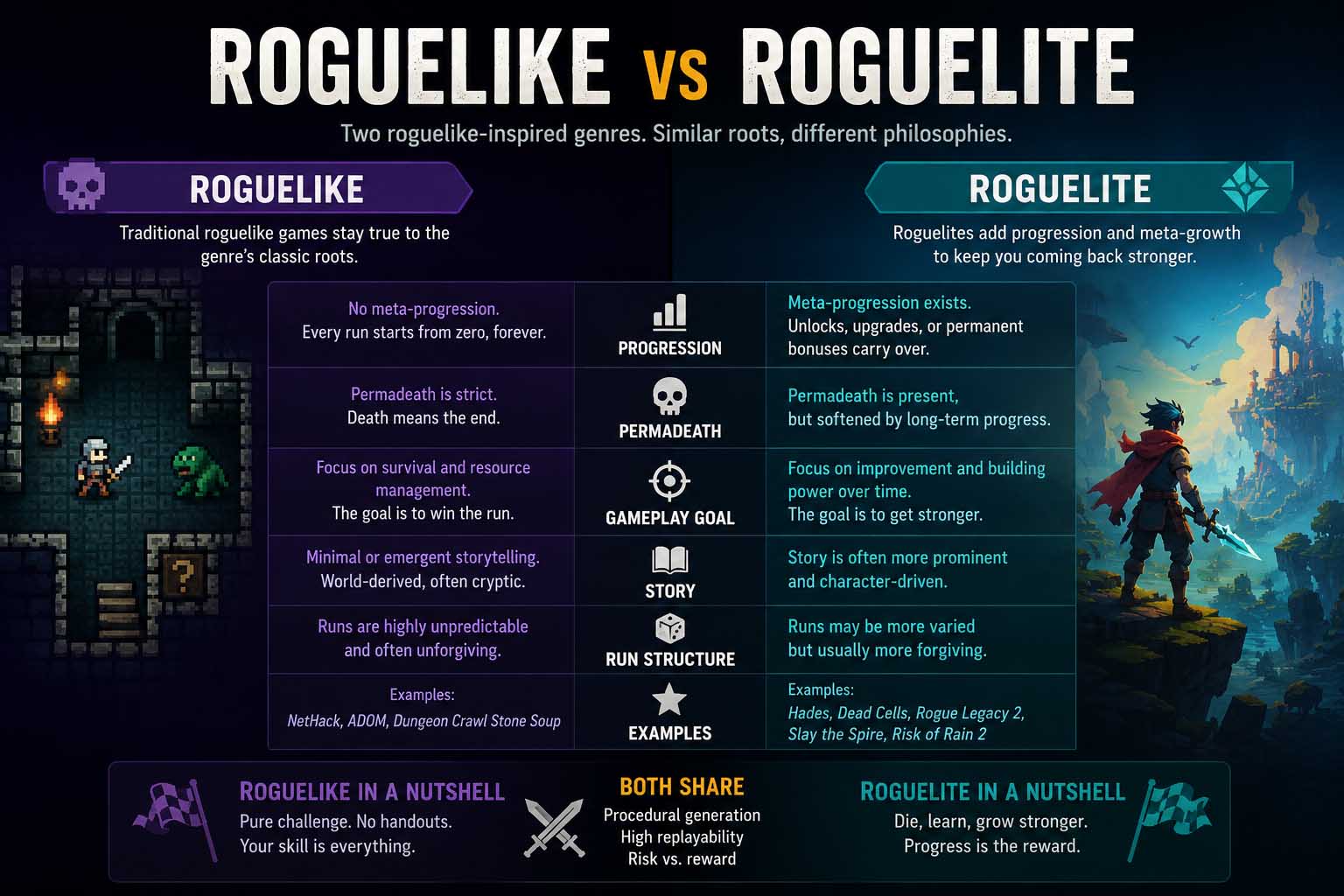
In simple terms, roguelikes focus on starting from scratch after every defeat, while roguelites soften that formula by letting players keep permanent upgrades between runs. Both genres use randomly generated levels and encourage repeated play, but they reward progress in different ways.
This guide explains the key mechanics, compares the two genres, and highlights the types of players who will enjoy each one.
What Is the Difference Between Roguelike and Roguelite?
The easiest way to understand what is the difference between roguelike and roguelite is to look at what happens after your character dies.
In a traditional roguelike:
- Death usually resets all progress.
- Every new run starts with a fresh character.
- Randomly generated maps create a new adventure.
- Careful planning matters as much as combat.
In a roguelite:
- Death ends the current run, but some progress remains.
- Players often unlock stronger abilities, weapons, or characters.
- Future runs become easier through permanent upgrades.
- Fast-paced action is more common than turn-based gameplay.
Although modern games sometimes blur these lines, permanent progression remains the biggest distinction between the two genres.
The Origins of Roguelike Games
The term “roguelike” comes from Rogue, a dungeon-crawling computer game released in 1980.
Rogue introduced features that later became genre standards:
- Procedurally generated dungeons
- Permadeath
- Random loot
- Turn-based movement
- Strategic resource management
Many classic developers continued building on these mechanics for decades.
If you enjoy retro gaming history, you’ll notice that many titles listed among the best SNES games borrowed ideas like exploration, hidden rewards, and challenging gameplay, even though they are not true roguelikes.
Difference Between Roguelike and Roguelite Games Explained
The phrase difference between roguelike and roguelite games often appears because modern releases combine mechanics from both genres.
Instead of treating them as completely separate categories, it’s helpful to think of them as two ends of a spectrum.
Roguelike Characteristics
Traditional roguelikes usually include:
- Permanent death
- Turn-based gameplay
- Procedural generation
- Resource management
- No permanent upgrades
- High difficulty
- Heavy emphasis on strategy
Because every decision matters, players often spend time evaluating risks before making their next move.
Roguelite Characteristics
Roguelites generally include:
- Permanent progression
- Unlockable characters
- Skill trees
- Meta progression
- Faster combat
- Action-oriented gameplay
- Randomized levels
Instead of punishing every failure equally, roguelites reward persistence by allowing players to become stronger over time.
Roguelike vs. Roguelite Comparison Table
| Feature | Roguelike | Roguelite |
|---|---|---|
| Permadeath | Yes | Yes, but with permanent progression |
| Permanent Upgrades | No | Yes |
| Gameplay Style | Usually turn-based | Usually real-time action |
| Difficulty | Very high | Moderate to high |
| Character Growth | Reset every run | Carries over between runs |
| Map Design | Procedurally generated | Procedurally generated |
| Learning Curve | Steeper | More beginner-friendly |
This comparison explains why newcomers often enjoy roguelites first before trying more traditional roguelikes.
Why Permadeath Feels Different in Each Genre
Permadeath exists in both genres, yet it creates a very different experience.
In roguelikes, death represents a complete restart.
You lose:
- Equipment
- Inventory
- Character progression
- Temporary upgrades
Success depends entirely on improving your skills as a player.
Roguelites approach failure differently.
While your current run ends, you often keep:
- Currency
- Unlockable weapons
- Character upgrades
- New abilities
- Additional playable characters
Because each run contributes to future progress, losing rarely feels like wasted time.
Random Generation Keeps Every Run Fresh
Procedural generation is one of the defining features shared by both genres.
Instead of replaying identical levels, players encounter:
- New enemy layouts
- Different treasure locations
- Random events
- Unique item combinations
- Changing boss encounters
This variety gives these games excellent replay value.
Even after hundreds of hours, players continue discovering new combinations and strategies.
Which Genre Is Better for New Players?
If you’re asking what’s the difference between roguelike and roguelite, you’re probably also wondering which genre is easier to start with.
For most beginners, roguelites are the better choice.
They usually provide:
- Faster progression
- More forgiving difficulty
- Permanent rewards
- Shorter learning curve
- More action-focused combat
Games like Hades, Dead Cells, and Rogue Legacy 2 introduce core roguelite mechanics without overwhelming new players.
Traditional roguelikes often appeal more to experienced players who enjoy planning every move and accepting that mistakes can end an entire run.
Why Roguelites Have Become So Popular
Over the last decade, roguelites have become one of the fastest-growing genres in gaming.
Developers frequently combine roguelite mechanics with:
- Deck builders
- Action RPGs
- Twin-stick shooters
- Platformers
- Survival games
- Bullet heaven games
Permanent progression gives players a constant sense of achievement, making each session feel rewarding even after defeat.
That design philosophy has helped many roguelites reach mainstream audiences while preserving the replayability that made classic roguelikes famous.
Common Mechanics You’ll See in Both Genres
Even though the genres differ, many features appear in both.
These include:
Random Loot
Weapons, armor, relics, or abilities often change every run, encouraging experimentation.
Risk and Reward
Players constantly decide whether to explore dangerous areas for stronger rewards or play safely.
Build Variety
Every run encourages different strategies based on the equipment and upgrades available.
Boss Battles
Most games include memorable bosses that test whether your current build is strong enough to continue.
These mechanics help explain why roguelikes and roguelites remain enjoyable long after the first playthrough.
Choosing the Right Experience
If you prefer mastering systems through repeated practice with little outside assistance, roguelikes offer an unmatched sense of accomplishment.
If you enjoy unlocking new weapons, abilities, and characters while gradually becoming stronger, roguelites provide a more accessible path without losing the excitement of randomized gameplay.
Both genres reward experimentation, patience, and adaptability. The best choice depends less on skill level and more on the kind of challenge you find satisfying.
Popular Roguelike and Roguelite Games
One of the easiest ways to understand the difference between roguelite and roguelike is by looking at well-known examples. Although some games borrow mechanics from both genres, most lean clearly toward one style.
Classic Roguelikes
These games stay close to the original formula established by Rogue.
- NetHack – Deep systems, turn-based gameplay, and complete permadeath.
- Dungeon Crawl Stone Soup – A challenging dungeon crawler with hundreds of strategic choices.
- Caves of Qud – Blends traditional roguelike mechanics with a rich sci-fi world.
These titles reward careful planning, patience, and learning through repeated failures.
Popular Roguelites
Modern roguelites often mix procedural generation with permanent progression.
- Hades – Fast combat, story progression, and permanent character upgrades.
- Dead Cells – Combines action platforming with unlockable weapons and abilities.
- Rogue Legacy 2 – Each new hero inherits traits while players improve their castle over time.
- Slay the Spire – A deck-building roguelite where every run creates different card combinations.
As of 2026, developers continue blending roguelite mechanics with genres such as shooters, strategy games, and city builders, making the category more diverse than ever.
How to Decide Which Genre Fits Your Playstyle
There’s no “better” option between roguelikes and roguelites. The right choice depends on what you enjoy.
Choose a Roguelike If You Enjoy
- Careful planning
- Tactical decision-making
- High difficulty
- Turn-based gameplay
- Starting fresh after every defeat
- Learning through trial and error
Players who appreciate classic game design often enjoy returning to these titles because every victory feels earned.
Choose a Roguelite If You Prefer
- Fast-paced combat
- Permanent progression
- Unlockable content
- Character upgrades
- Frequent rewards
- Short gaming sessions
Many newcomers begin with roguelites because they offer a smoother learning curve while keeping the excitement of random runs.
Tips for Success in Either Genre
Whether you’re playing a traditional roguelike or a modern roguelite, a few habits can improve your results.
Learn Before Taking Risks
New players often rush into dangerous encounters.
Instead, observe enemy patterns, understand item effects, and save valuable resources until they’re truly needed.
Experiment With Different Builds
One weapon or strategy won’t work in every run.
Try combinations you wouldn’t normally choose. Randomized systems often reward creative thinking.
Accept That Failure Is Part of Progress
Losing isn’t a sign you’re playing poorly.
Every unsuccessful run teaches something about enemy behavior, resource management, or build choices.
The best players improve because they analyze mistakes rather than becoming frustrated.
Manage Resources Carefully
Health, healing items, currency, and rare equipment usually become more valuable later in a run.
Avoid spending everything early unless the reward clearly outweighs the risk.
Common Misconceptions About Roguelikes and Roguelites
Many players misunderstand these genres because marketing terms are sometimes used loosely.
“Every Game With Permadeath Is a Roguelike”
Not necessarily.
Permadeath is only one feature. Traditional roguelikes usually include procedural generation, strategic gameplay, and very limited permanent progression.
“Roguelites Are Easy”
Many roguelites remain extremely challenging.
Permanent upgrades make long-term progress easier, but individual runs can still demand quick reactions and smart decision-making.
“The Terms Mean the Same Thing”
Although they’re closely related, they describe different design philosophies.
The presence or absence of permanent progression is still the easiest way to tell them apart.
Why These Genres Continue to Grow
Randomized gameplay gives players a reason to return even after finishing a game.
Instead of memorizing levels, you adapt to new situations every time.
Developers also combine roguelike mechanics with other genres, creating fresh experiences such as:
- Action RPGs
- Card games
- Twin-stick shooters
- Survival games
- Platformers
- Strategy games
That flexibility has helped roguelikes and roguelites remain popular with both indie developers and major studios.
A Quick Checklist Before Buying
If you’re unsure whether a game is a roguelike or roguelite, ask these questions:
- Does my character keep permanent upgrades after dying?
- Is every run randomly generated?
- Does progress reset completely?
- Is combat real-time or turn-based?
- Does the game reward long-term progression?
- Am I looking for strategy or action?
Answering these questions usually tells you which genre the game belongs to.
Retro Roots and Modern Evolution
Many players discover roguelikes after exploring older games that emphasized challenging gameplay and experimentation.
If you enjoy revisiting handheld classics, you’ll notice that several titles featured in collections of the best gameboy advance games encouraged repeated attempts, careful resource management, and rewarding difficulty, even if they weren’t true roguelikes.
Likewise, players searching for games to play when bored often find that roguelites are an excellent choice because every session feels different. Even a quick 20-minute run can produce new weapons, surprising encounters, and unexpected strategies.
Frequently Asked Questions
Is Hades a roguelike or a roguelite?
Hades is generally considered a roguelite because players unlock permanent upgrades, new weapons, and story progression between runs.
Is Dead Cells a roguelike?
No. Dead Cells is also a roguelite since many upgrades and unlocks carry over after each attempt.
Why are roguelikes usually harder?
Traditional roguelikes remove permanent progression, so every run depends entirely on player skill, planning, and knowledge.
Can a game be both a roguelike and a roguelite?
Some games include mechanics from both genres, making classification difficult. Developers often mix ideas instead of following strict genre rules.
Which genre should beginners start with?
Most beginners enjoy roguelites because permanent progression makes learning less frustrating while still delivering the excitement of randomized gameplay.
Your Next Adventure
Understanding the difference between roguelike and roguelite helps you choose games that match the experience you’re looking for. If you enjoy mastering systems with no safety net, roguelikes provide a rewarding challenge where every decision matters. If you’d rather unlock new abilities, experiment with builds, and feel steady progress across multiple runs, roguelites offer a more approachable experience.
Whichever genre you choose, expect plenty of replay value. Randomized worlds, evolving strategies, and memorable victories keep players coming back long after the first run. Start with a game that matches your preferred pace, embrace the learning process, and you’ll quickly discover why both roguelikes and roguelites remain some of the most replayable genres in modern gaming.